
Turning Livestock Waste into Income: RHuDI Joins CARE Denmark's Biogas Project in Niger
In the drylands of Maradi and Zinder, two problems have long compounded each other: households cook over open fires because they have no affordable alternative to firewood, and farmers can no longer afford the fertiliser their depleted soils need. CARE Denmark and local communities have spent years building a solution that turns one problem into the fix for the other — and RHuDI is pleased to announce that we have been subcontracted to support the next phase of this project.
The model: manure in, income out
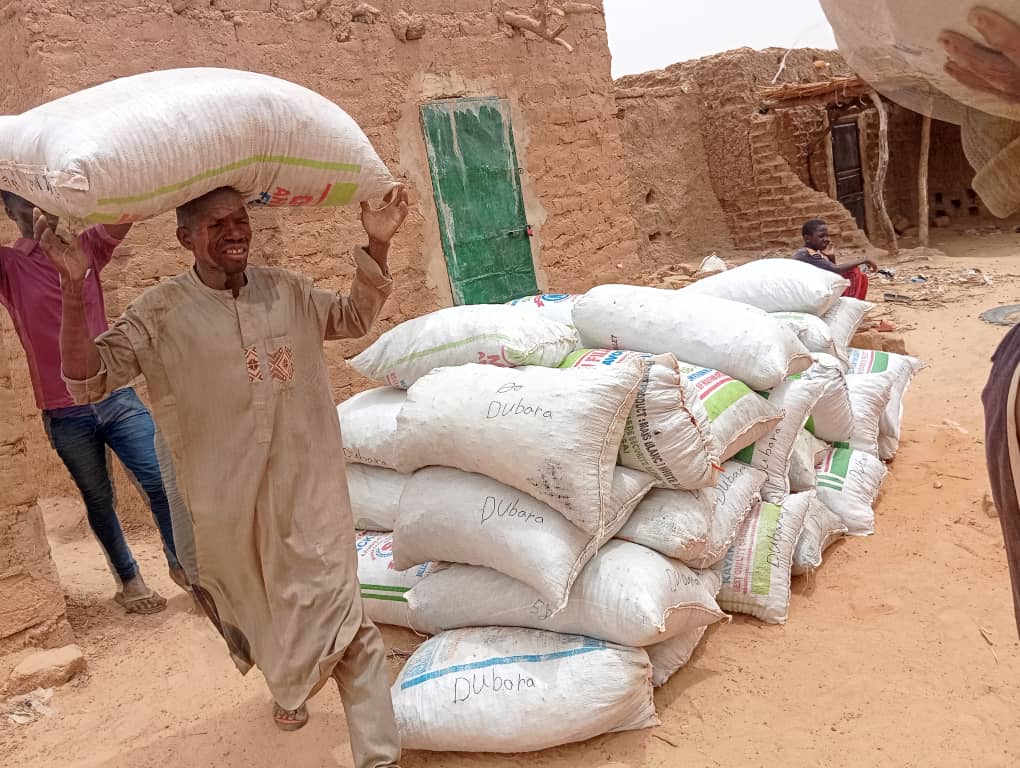
At the centre of the project is a simple circular chain. Households feed household biodigesters with livestock manure. The digesters produce two things: biogas, which replaces firewood for cooking, and bioslurry, a nutrient-rich organic fertiliser. Taimakon Manoma (TM), a private aggregator, finances the construction of the digesters, collects bioslurry as in-kind loan repayment, and sells it into fertiliser markets in Niger's crop-producing south. The revenue TM earns repays the construction loan and funds the next round of digesters. It is not a pilot anymore. Between 2022 and 2024, hundreds of digesters were installed, proving the technology and the community demand. In 2025, Taimakon Manoma took the next step itself: the company invested its own capital to commercially finance 24 biodigesters, with no donor subsidy involved. That cohort validated the unit economics with a full year of real operating data — and confirmed that the model works as a genuine business, not just a development project.
Why it matters
- Affordable clean cooking: biogas replaces firewood, cutting deforestation pressure and the hours women and girls spend gathering fuel.
- Affordable fertiliser: bioslurry sells well below the price of chemical fertiliser, giving smallholder farmers a locally produced alternative.
- A self-financing model: households repay in fertiliser, not cash, and once a loan is cleared, ownership of the digester transfers to the community.
- A business TM is willing to fund itself: TM's own 2025 investment shows a private aggregator putting its own capital behind the model, on the strength of the returns it generates.
Scaling up
Having proven the model with its own capital, TM is now moving from a 24-unit commercial cohort toward a target of around 100 new digesters in 2026 — a roughly four-fold expansion built on the same value chain: households and community organisations feeding and hosting digesters, TM aggregating and reselling bioslurry, and repayment flowing entirely through fertiliser rather than cash. RHuDI has been brought on to support the structuring of this scale-up, helping turn a proven, community-led model into a well-documented, investment-ready case as it grows. This is exactly the kind of project RHuDI exists for: profitable at its core, sustainable because of that profitability, and built to channel capital toward real impact for some of the communities most exposed to climate pressure. We're glad to be part of it.
From cocoa pod to fertilizer: building a more profitable cocoa value chain
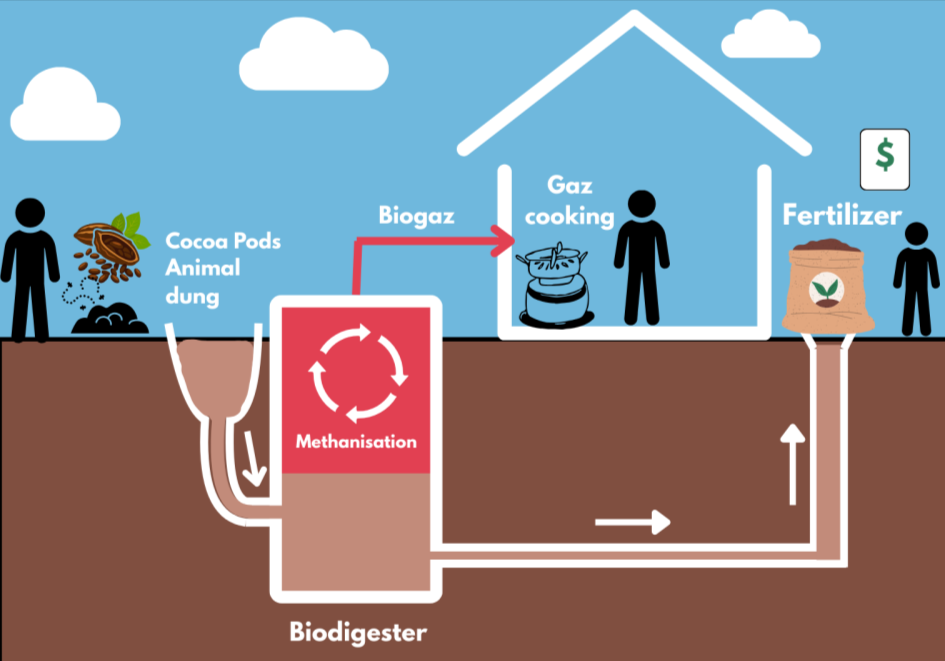
Côte d’Ivoire produces nearly 40% of the world’s cocoa, yet most cocoa farmers remain trapped in poverty. At the same time, more than 4 million tonnes of cocoa pod waste are left unused every year across plantations. This project aims at transforming that waste into value. By developing low-cost biodigesters operated by cocoa cooperatives, cocoa residues and animal manure can be converted into organic fertilizer and renewable biogas.
This circular system helps farmers access fertilizers, restore soil fertility, and generate new income streams for rural communities and local enterprises. Beyond the technology, the initiative aims to build a scalable economic model where cooperatives, farmers, and local SMEs benefit from the valorization of agricultural waste. The project will begin with a pilot biodigester in the Haut-Sassandra region, one of Côte d’Ivoire’s main cocoa-producing areas. Once validated, the model could scale to around 100 biodigesters, benefiting thousands of cocoa farmers while improving soil health and reducing pressure on forests.
Why It Matters ? This initiative addresses three major challenges of the cocoa sector at once:
- Low farmer incomes: new value from agricultural waste and a stable source of income for the farmers
- Soil degradation: affordable organic fertilizer
- Deforestation and energy poverty: renewable biogas alternatives
By turning cocoa waste into resources, the project contributes to building a more resilient and sustainable cocoa economy. Cocoa prices can change very quickly—end of 2025, they dropped from 2,800 CFA/kg to 1,200 FCFA/kg in just five months—making a stable source of income especially valuable for cocoa farmers.
We are currently looking for partners, foundations, and investors interested in supporting the feasibility study and pilot phase of this initiative. If you would like to support an innovative circular solution for the cocoa sector, we would be happy to discuss potential collaboration.
Contact us ! contact@rhudi.org - +32 473 42 33 86
Assessing Investment Opportunities in the Fish Value Chain of Mbandaka
We conducted an economic and value chain analysis of the fisheries sector in Mbandaka, Democratic Republic of Congo, to assess opportunities for sustainable investment and local enterprise development. Based on fieldwork in Mbandaka and Kinshasa and using the VCA4D (EU) and FISH4ACP (FAO) analytical frameworks, the study examines the sector from economic, social, environmental, and functional perspectives.
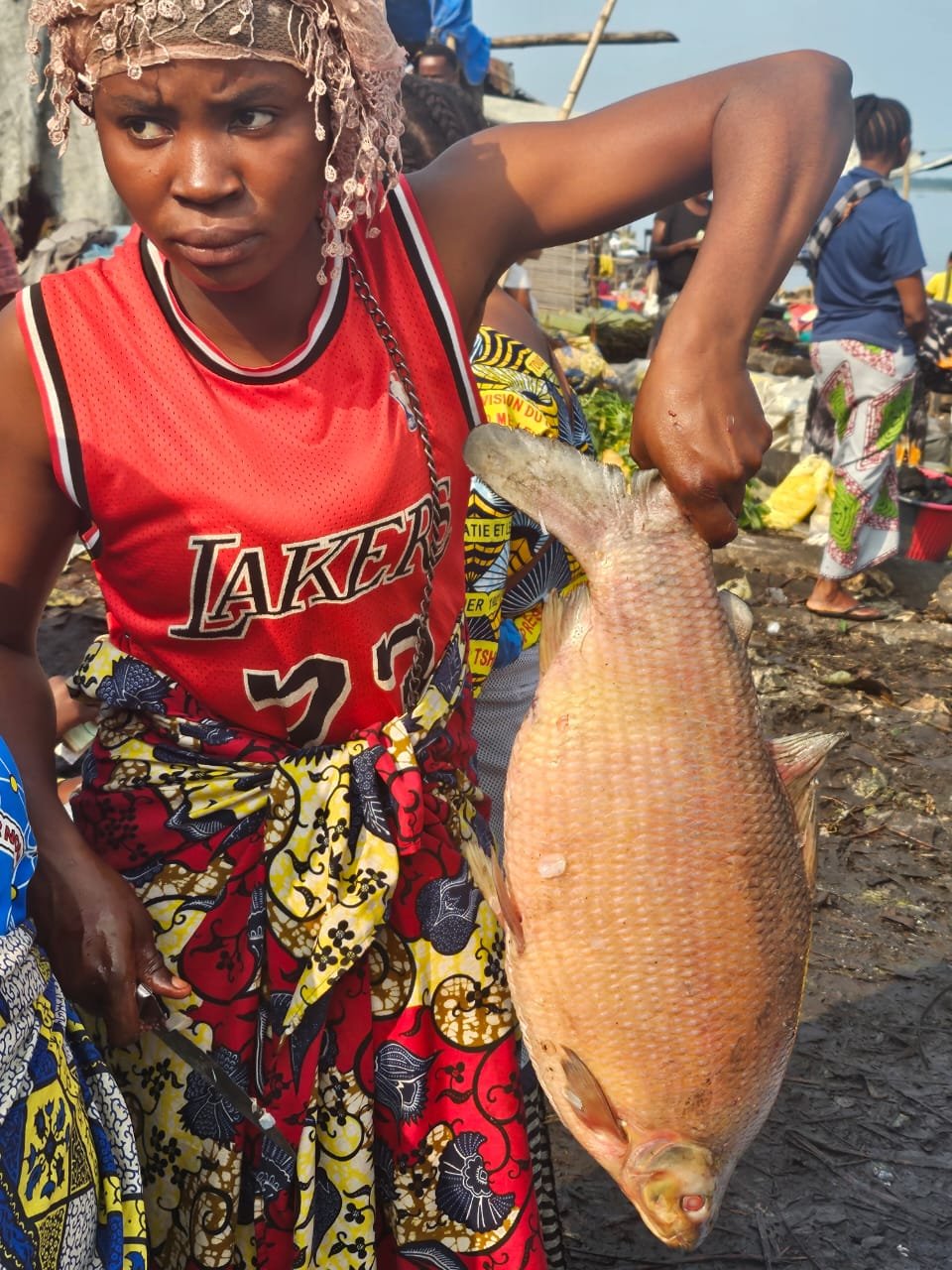
The fisheries value chain plays a critical role in food security, employment, and livelihoods in the Equateur province. Yet despite its strong natural potential, the sector remains largely artisanal and constrained by limited infrastructure, weak regulation, and declining fish stocks. Our analysis highlights the central role of small-scale actors — fishers, processors, traders, and transporters — who operate in highly informal and resource-constrained environments.
Women play a particularly important role in processing and trade, yet often remain confined to the least profitable segments of the value chain. Beyond diagnosing structural challenges, the study identifies key opportunities to strengthen the sector through innovation, SME development, and improved market organization. Enhancing post-harvest processing, developing decentralized cold-chain solutions, improving access to finance, and supporting local enterprises could significantly increase value creation while reducing environmental pressures.
By combining economic analysis with field-based insights, the study provides practical recommendations to support sustainable fisheries management, stronger local businesses, and more resilient food systems in the Congo River basin.
Contact us ! contact@rhudi.org - +32 473 42 33 86